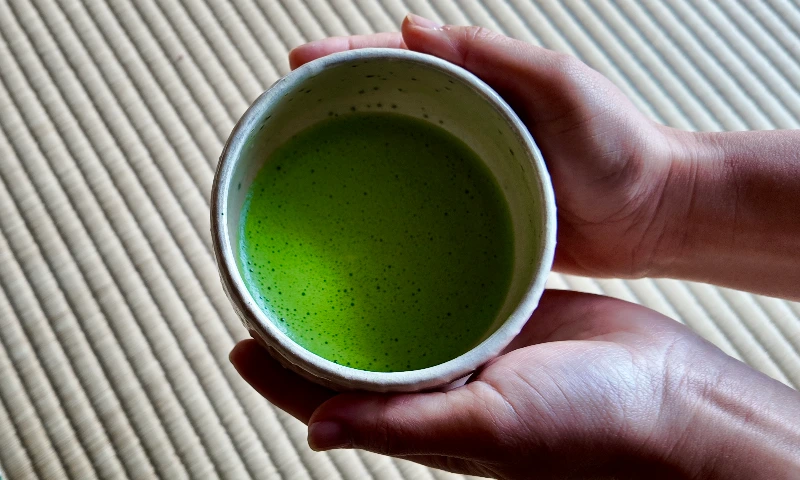
A few years ago, the idea of drinking matcha with only hot water would have seemed unusual to most people in Europe. Matcha was something you added to lattes, desserts, or smoothies, not something you savored slowly, alone in a bowl.
But that is exactly what matcha is, at its most honest.
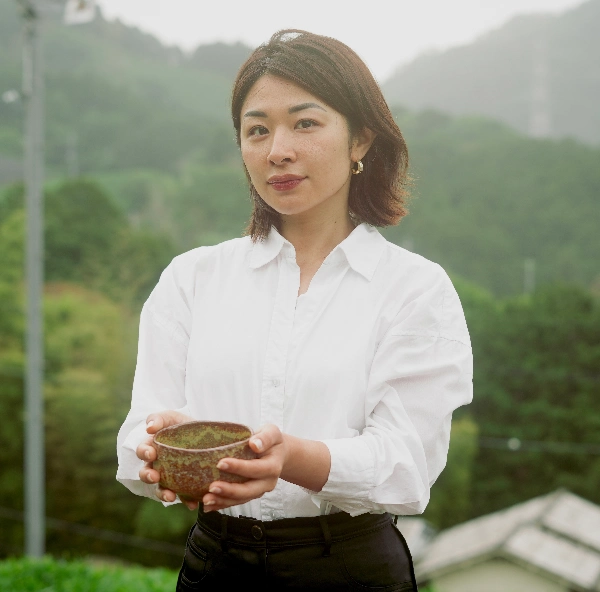
I started MUSUBI MATCHA because I wanted to share what Japanese authentic matcha truly tastes like – smooth, naturally sweet, rich in umami, with a depth that stays with you long after the bowl is empty. Not the bitter, flat powder that most people in Europe have encountered. Not a trend, as a ritual.
When you try to make a bowl of matcha with only hot water is called Usucha 薄茶 in Japan, and it ended up tasting not what you expexted – often too bitter… the reason might be one of these.
1. The matcha itself
This is where it starts, and where most people are let down without knowing it.
Many of the matcha sold in Europe is blended, low-grade, or simply not made for drinking pure. It is designed for lattes, where milk masks the bitterness. Labelled “ceremonial grade” or “premium,” it promises something it cannot deliver.
The price of truly high-quality matcha has nearly doubled over the past year. That puts every seller in front of a choice: quietly lower the grade to protect the margin, or hold the standard and accept the cost.
To give you a sense of what quality actually costs: a genuinely good matcha for drinking pure starts at around €35 for 30g, and can reach €70 or more for the finest first-harvest grades. For the most concentrated preparation, prices can exceed €100 for 30g.
If you see matcha labelled “ceremonial” or “premium” for significantly less than that — it is worth questioning what you are actually buying.
Price alone is not a guarantee of quality. But below a certain threshold, the economics of honest matcha simply don’t work.
I made my choice when I founded MUSUBI MATCHA. Only matcha that can be enjoyed pure, smooth, vibrant, and fully expressive in the bowl, will ever carry our name. Nothing blended. Nothing compromised. Only what I would be proud to prepare for you myself.
Real matcha — grown under traditional shade, harvested at the right moment, stone-milled slowly — is not bitter. It is smooth, bright, and naturally sweet. If your matcha is unpleasant to drink with hot water alone, the matcha is the problem.
2. The water temperature
Water temperature matters as much as the matcha you choose.
Catechins, the compounds responsible for bitterness begin to extract more aggressively at around 85°C. The higher the temperature, the more bitterness ends up in your bowl. The ideal range is 70–80°C, with 85°C as an absolute maximum.
In traditional tea ceremony, a skilled tea master may intentionally use slightly higher temperatures, adjusted for the season, the occasion, or the guests. But that is a deliberate choice made with precision and experience. For everyday preparation at home, keeping the temperature lower will almost always give you a smoother, more enjoyable bowl.
If you don’t have a temperature-controlled kettle, here are two simple alternatives:
After boiling, transfer the water into another cup or vessel twice. Each transfer drops the temperature by roughly 10°C, bringing it to around 75–80°C which is ideal for matcha.
Alternatively, add a small amount of room temperature water, about 15ml directly to your matcha powder first. Mix it into a smooth paste before adding the hot water. This protects the matcha from the initial heat and often results in a particularly smooth, well-integrated bowl.
This single adjustment can completely transform what ends up in your cup.
3. The ratio — and the water you use.
The ratio matters. For a smooth, balanced bowl, use 1.5 to 2g of matcha for 70ml of water. More matcha doesn’t mean more flavour, it means more bitterness.
But there is something most matcha guides never mention: the water itself: use soft water.
This matters more in Europe than almost anywhere else, and it is one of the reasons the same matcha can taste bitter in Paris but smooth in Tokyo.
Water high in minerals, particularly calcium and magnesium, common in hard water across France and much of Europe interacts with the catechins in matcha in a way that amplifies bitterness and astringency. The minerals bind with the polyphenols, altering the structure of the taste. The result is a rougher texture on the palate and a sharpness that pushes bitterness forward, similar to what happens when hard water is used to brew wine or black tea.
At the same time, hard water tends to suppress the perception of sweetness and umami. It is not that the matcha contains less of these qualities, it is that the mineral content interferes with how your palate receives them. Bitterness comes forward. Sweetness recedes.
Japanese tap water is naturally soft, which is one reason matcha prepared in Japan so often tastes smoother and more balanced than the same matcha prepared in Europe.
The practical solution is simple: use a low-mineral still water, ideally below 100mg/L of total dissolved solids. In France, Mont Roucous or Volvic work well. In Italy, Panna or Sant’anna are good option. Evian, despite its reputation, is too high in minerals for matcha.
This single change, switching your water can noticeably improve what ends up in your bowl, without changing anything else.
One more consideration worth mentioning: if you have access to a Japanese iron kettle, a tetsubin – it is worth using it. The iron gradually softens the water as it heats, rounding out the mineral edges and adding a subtle smoothness to the taste. It is a small detail, but one that tea practitioners in Japan have known for centuries.
4. Skipping the sift
Matcha clumps. Even high-quality matcha, stored in a tin, will form small clusters that don’t dissolve easily and create a bitter, gritty texture in the bowl.
Sifting takes thirty seconds and it changes everything. Rest a fine-mesh sifter directly over your chawan, add your matcha, and tap gently. The powder falls through aerated and even, ready to dissolve cleanly the moment water touches it. The result is a creamier texture, better foam, and a noticeably smoother bowl.
In traditional Japanese tea ceremony, matcha is always sifted before preparation, without exception. This happens in the mizuya, the preparation room behind the tearoom, before the matcha is placed into the natsume. It is never skipped, because those who practice tea know exactly what difference it makes.
At home, sifting an entire tin at once is not always practical. Sift directly into your chawan each time you prepare a bowl. Thirty seconds, every time.
Discover our matcha tools → here
5. The whisking technique.
The goal is not to stir, it is to build a fine, even foam across the entire surface of the bowl. That foam is what softens the bitterness, carries the umami, and gives matcha its characteristic texture. A bowl without foam is flat, in every sense.
Begin with the tines of the chasen resting lightly on the bottom of the bowl. Use your wrist, not your arm to drive the movement. Whisk in large, active strokes, creating enough turbulence to fully incorporate the matcha and water together.
As the foam begins to develop, gradually raise the chasen toward the surface. In the final seconds, slow into a gentle zigzag motion just at the top, refining the bubbles into something fine and even.
Thirty to forty seconds of active whisking is enough. When the surface is covered in small, consistent bubbles, you are there.
Hold the chasen lightly. It should never feel like effort.
6. The bowl
The chawan you choose matters more than most people realise.
A wide, open bowl allows full freedom of movement for the chasen and gives the foam room to develop properly. A narrow cup or tall glass restricts the wrist, limits the whisking motion, and makes it nearly impossible to build the texture that makes matcha enjoyable.
If you have been preparing matcha in a tea cup or a glass, try a proper chawan. The difference is immediate.
And beyond function, the bowl is part of the ritual itself. Choosing a different chawan for winter or summer, for a quiet morning or a special occasion, is one of the small pleasures that make the matcha ritual genuinely your own. In Japan, a wide, shallow hira-chawan is traditionally used in summer, its open form suggests coolness and lightness. A deeper, narrower bowl holds warmth through the cold months.
The bowl is not just a vessel. It is how the ritual changes with the seasons, and from this month, MUSUBI MATCHA begins something new.
Alongside our matcha, we are now curating a small selection of antique Japanese tea ware sourced directly from Kyoto. Each piece is unique. Each one carries its own history, its own character, its own quiet beauty.
A bowl that has been held by other hands, in other mornings, in another century, it changes how the ritual feels.
One piece. One owner. When it is gone, it is gone.
Written by Ryoko Benoist – founder of MUSUBI MATCHA, a certified Japanese Tea Advisor, and the author of Matcha — Histoire, tradition et recettes (Éditions La Plage, 2025). MUSUBI MATCHA sources exclusively from a family farm in Wazuka, Kyoto, of over 350 years, and one of the first in Japan to obtain JAS organic certification.
Discover our matcha → shop now