
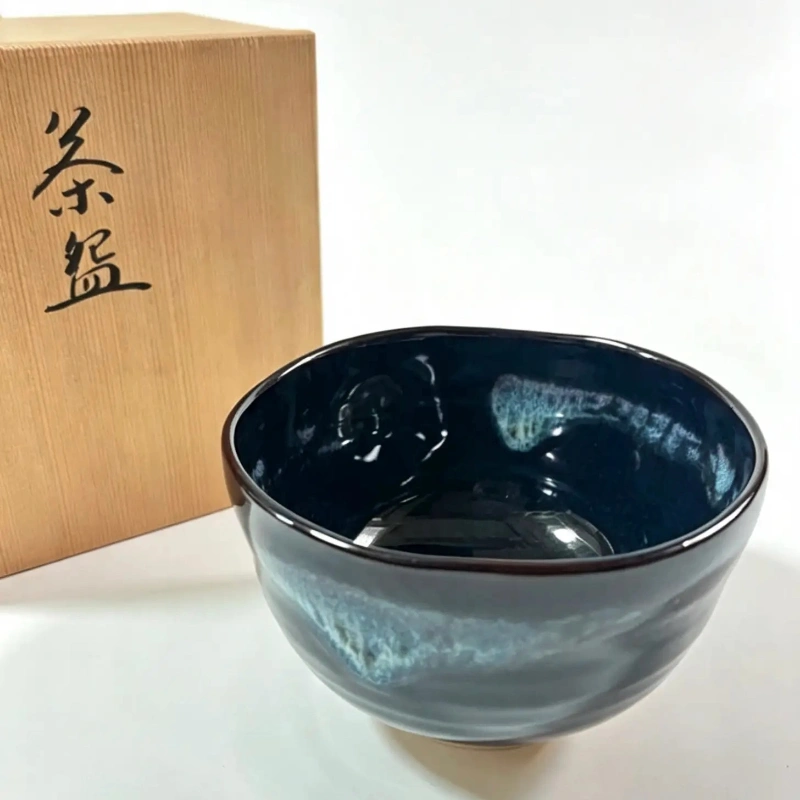
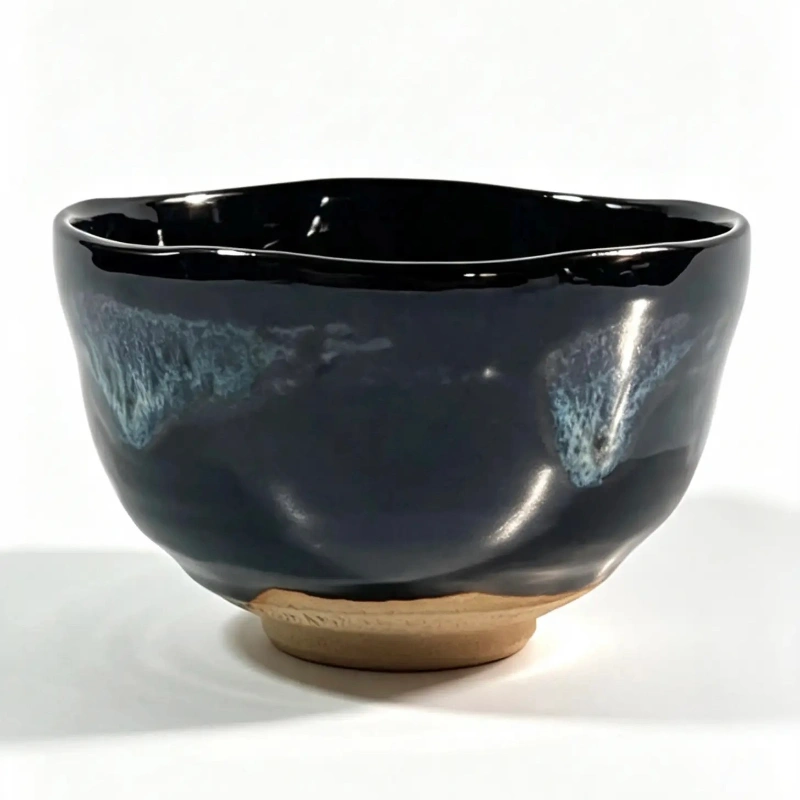
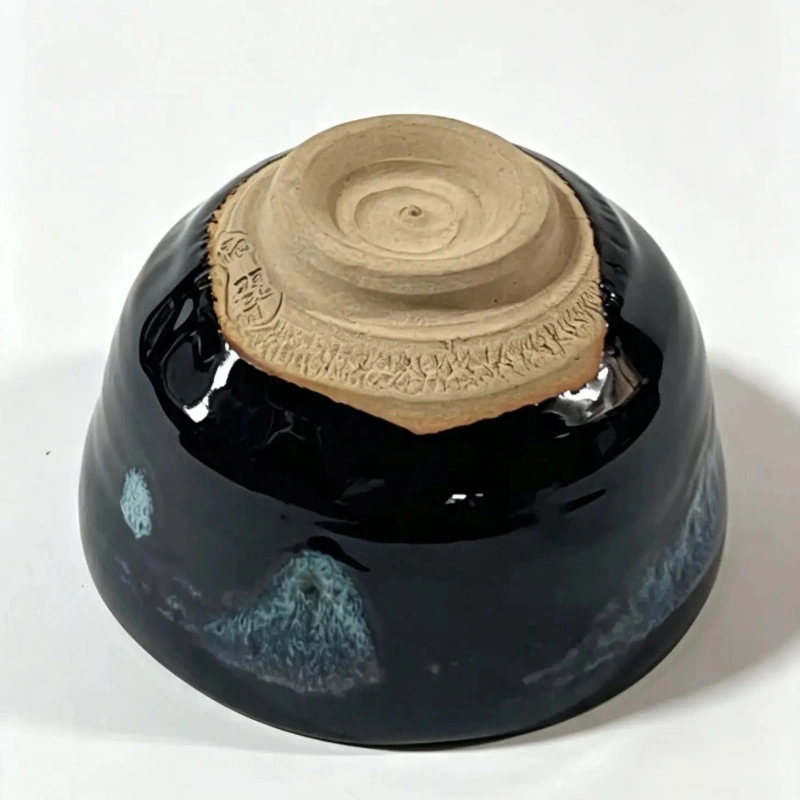
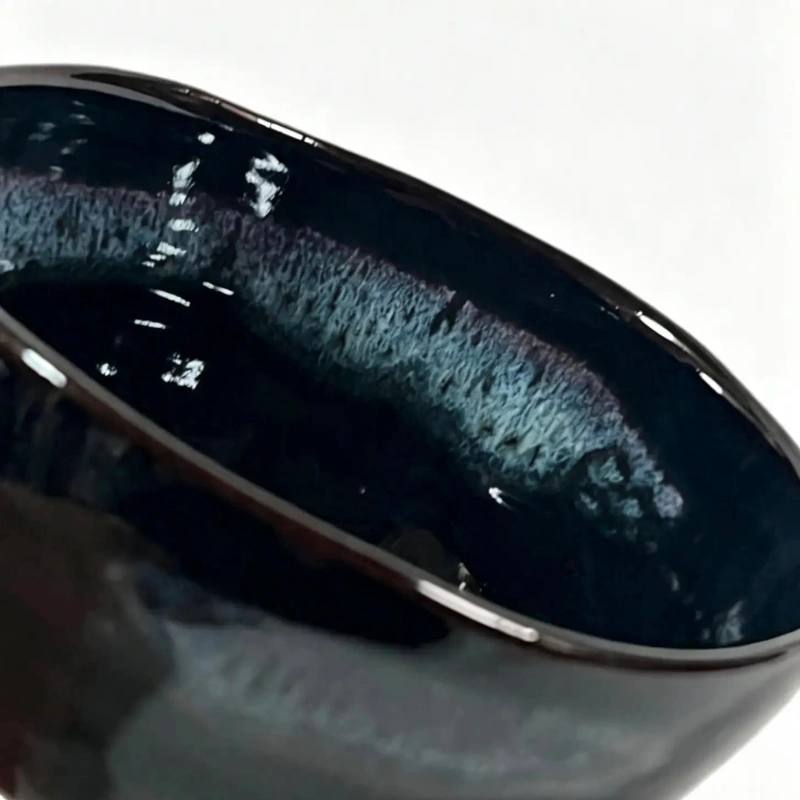
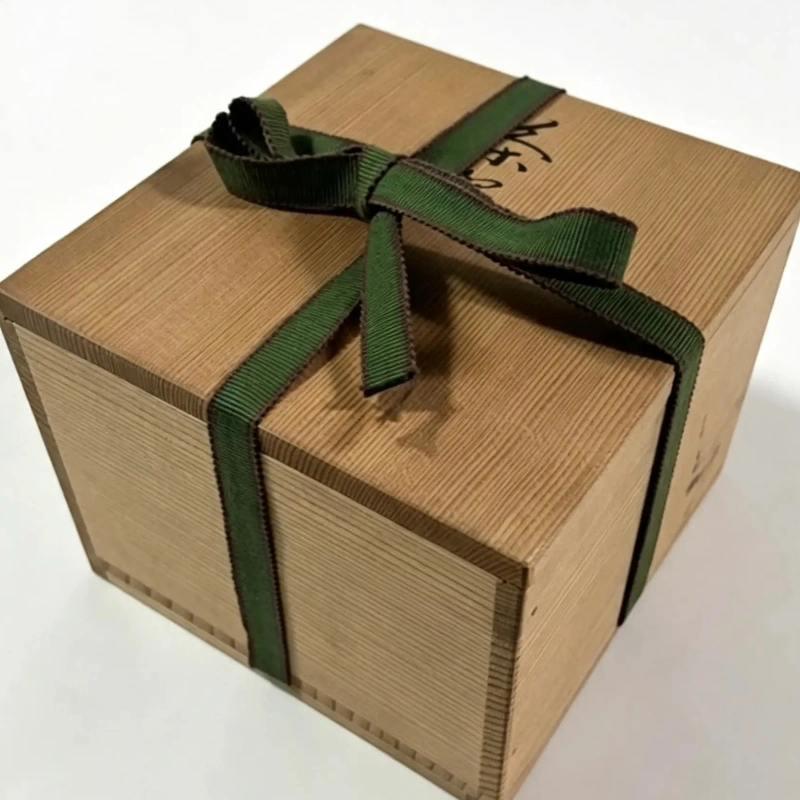
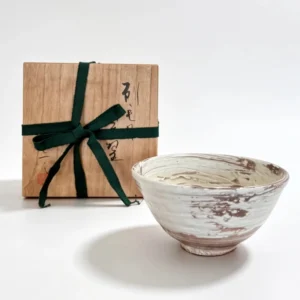
Kyoto Chawan “Tekisui” by Honganji-gama – One piece only.
100,00€
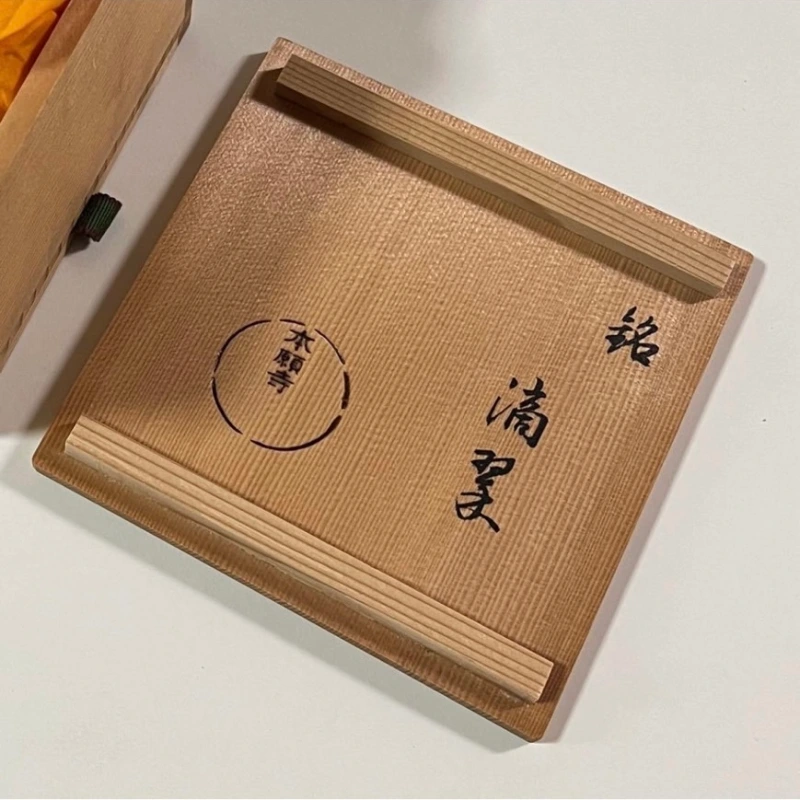
Some bowls are given names, this one was named for the colour of jade after rain.
滴翠 – Tekisui. Dripping green. The name conjures what it promises: the moment a single drop of water
moves across a surface of deep jade, carrying the colour with it, leaving the stone changed by its passing. It is a name from classical Japanese poetry, from the tradition of seeing landscapes in miniature, of finding the whole of nature inside a single well-chosen word.
In the tea ceremony, a named bowl is not simply merchandise. It is a bowl that someone believed deserved a title – that its form or glaze or presence earned the right to be called something. The act of naming is the act of recognition.
— The Kiln —
Honganji-gama (本願寺窯) is the kiln of Nishi Hongan-ji — one of the great Buddhist temples of Kyoto, a UNESCO World Heritage Site established in its current form in 1591, and the head temple of the Jōdo Shinshū sect. The temple’s relationship with the arts runs centuries deep. To carry the name of Honganji-gama is to carry the weight of that lineage.
The bowl is made in the Kyoto tradition – kyo-yaki (京焼), the ceramic culture that grew up around the refined tastes of the imperial capital, known for elegance, restraint, and an attention to glaze and form that prizes quiet beauty over drama.
This piece.
The mei (銘) Tekisui is written on the box. The bowl itself is wide enough to whisk with ease, its proportions classical: 12 cm across, 7.4 cm tall – the dimensions that centuries of tea practice have found to be right. The glaze carries the depth that good Kyoto ceramics always carry: something that changes as the light moves around it.
It is in good condition. No significant marks. A bowl that has been kept, and is ready to be used.
To hold this bowl is to hold something that already has a name. Now it needs hands.
Only one exists.
Free shipping from €85 within Europe.
1 in stock
Reviews
There are no reviews yet