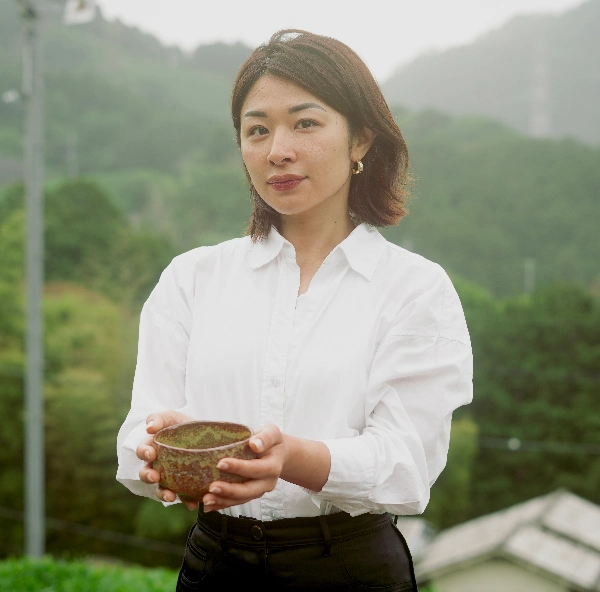
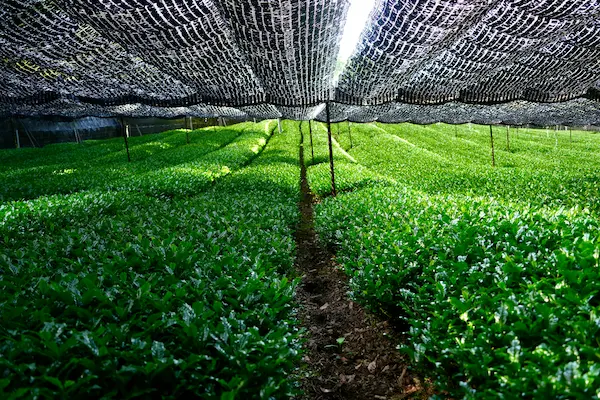
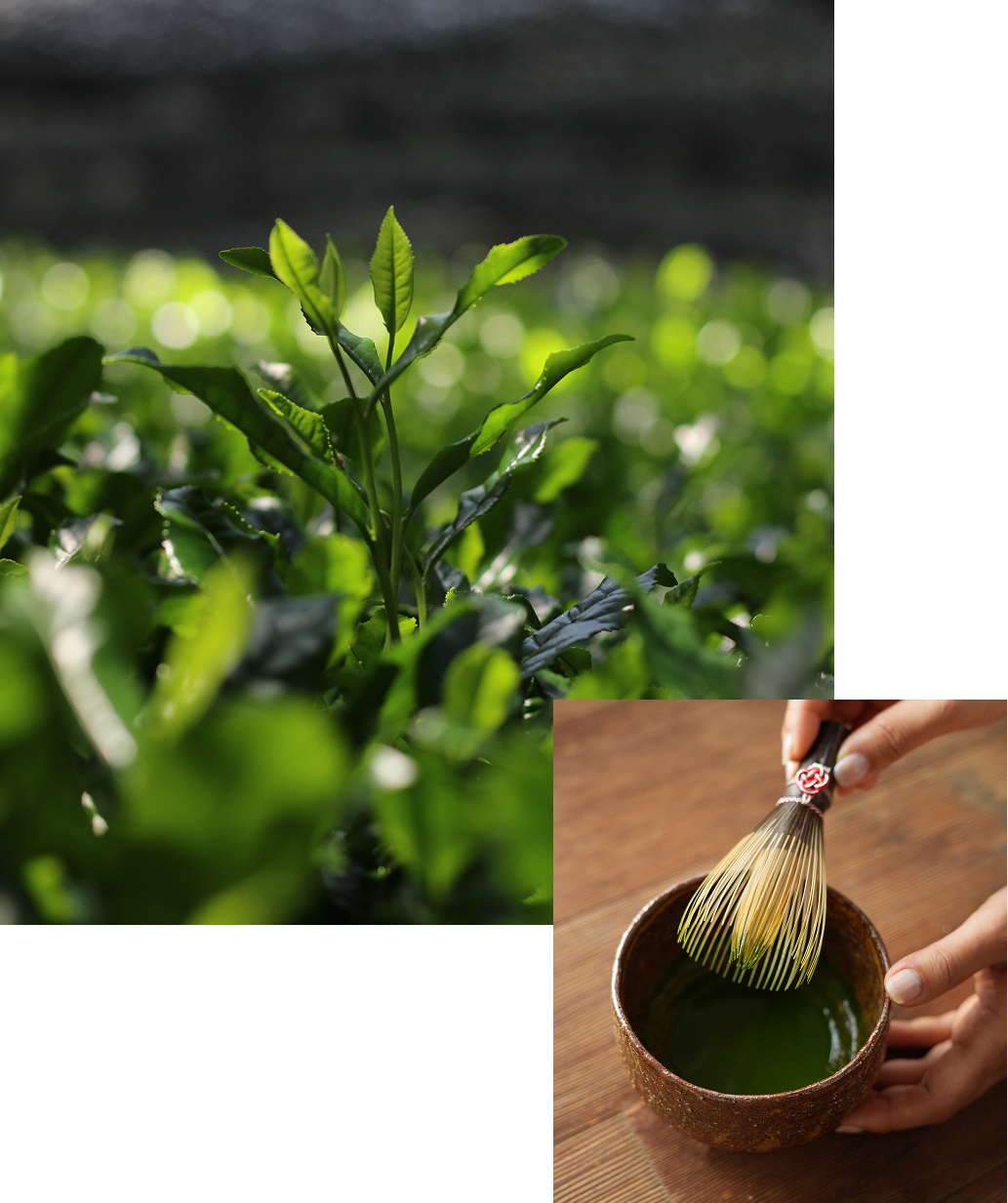
Wazuka matcha comes from Wazuka (和束), a small hillside town south of Kyoto where tea has been grown for around 800 years. At MUSUBI MATCHA, I source single-origin organic matcha from one family farm there, the Nakai family. Their first-harvest Okumidori tencha is aged for months in cold storage, following an Edo-period tradition, then slowly stone-milled in very small quantities.
Wazuka: One of Japan’s Oldest Tea-Growing Areas
Wazuka is one of the oldest tea-growing areas in Japan. Steep valleys, morning fog rising from the river and well-drained mountain soil suit the slow, careful cultivation that tencha, the leaf that becomes matcha, requires. In 2015, Wazuka’s tea landscapes were recognised as part of Japan Heritage.
Unlike large production areas, Wazuka has stayed close to traditional tea farming. Its landscape and climate favour unhurried growing, which is exactly what high-grade matcha asks for.
Aged Matcha (熟成, Jukusei): A Tradition from the Edo Period
In the Edo period, freshly harvested tencha was sealed in ceramic tea jars (茶壺, cha-tsubo) and left to age through the summer. In autumn, the jars were opened in a ceremony called kuchikiri (口切り), which still marks the beginning of the new tea year in the tea ceremony. Time softens bitterness and brings out sweetness.
The tradition continues today. After the May harvest, the tencha for MUSUBI MATCHA rests in controlled cold storage until autumn, and only then meets the stone mill. The Premium Matcha and the Premium Reserve rest for 5 months. My one-year aged matcha rests for a full year.
Why Organic Matcha Is Rare in Wazuka
Few tea farmers in Wazuka are certified organic. Growing shaded tea without synthetic pesticides or chemical fertilisers demands time, labour and experience. The Nakai family has grown tea organically for more than 40 years.
My Matcha: First-Harvest Okumidori from the Nakai Farm
Both of my matchas come from the Nakai farm’s first-harvest Okumidori, stone-milled slowly in very small quantities. Okumidori is a cultivar prized for matcha: its deep green colour, gentle sweetness and soft, rounded umami.
|
|
Premium Matcha |
Premium Reserve |
|---|---|---|
|
Cultivar |
Okumidori, first harvest |
Okumidori, first harvest |
|
Shading |
Shaded in the classic way |
Shaded on a trellis (tana), for a finer leaf |
|
Aging |
5 months |
5 months |
|
Best for |
Usucha |
Usucha and koicha |
|
Quantity |
Small batches |
100 units |
How to Enjoy Wazuka Matcha
My matcha is made to be enjoyed pure, with hot water alone:
- Usucha (薄茶): light, smooth and aromatic.
- Koicha (濃茶): thick, sweet and deeply ceremonial. For the Premium Reserve.
To understand the difference between the two, read my guide to koicha vs usucha.
Frequently Asked Questions
What is Wazuka matcha?
Wazuka matcha is matcha grown in Wazuka, a hillside town south of Kyoto with around 800 years of tea history. Its valleys, morning fog and mountain soil are ideal for slowly grown, shaded tencha.
Is Wazuka matcha the same as Uji matcha?
Wazuka lies within the Uji tea region of Kyoto Prefecture, and a large share of Uji tea is grown there. Wazuka matcha names its exact place of origin: the town and, for MUSUBI MATCHA, the farm.
What is aged matcha?
Aged matcha is made from tencha that rests for several months after harvest before stone-milling. This Edo-period tradition softens bitterness and brings out sweetness and depth.
What is Okumidori matcha?
Okumidori is a Japanese tea cultivar valued for matcha. It gives a deep green colour, gentle sweetness and soft, rounded umami.
Is MUSUBI MATCHA single-origin?
Yes. All MUSUBI MATCHA comes from a single farm: the Nakai family farm in Wazuka, Kyoto, which has grown tea organically for more than 40 years.
Written by Ryoko Benoist, founder of MUSUBI MATCHA, certified Japanese Tea Advisor and author of Matcha: Histoire, tradition et recettes (Éditions La Plage, 2025). MUSUBI MATCHA sources exclusively from a family farm in Wazuka, Kyoto, with more than 350 years of tea-growing history.
Discover our matcha → Shop now