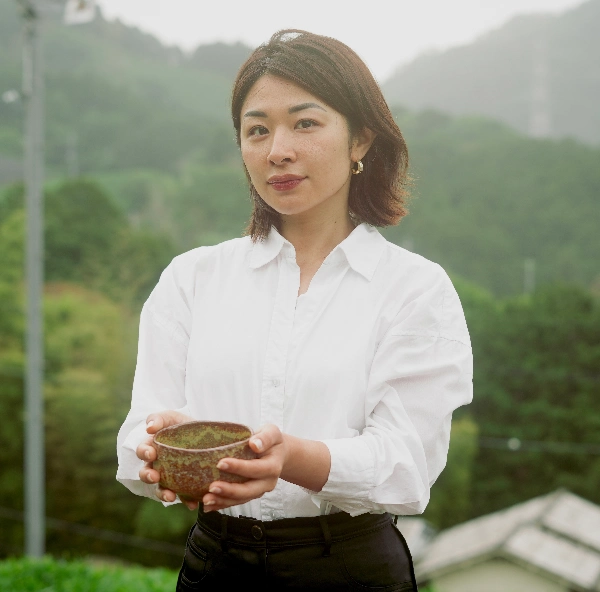
When we think of tea — especially Japanese tea — freshness often comes to mind. Words like shincha 新茶 suggest that the newer, the better. However, in the world of Uji matcha, particularly high-quality ceremonial matcha, harvest is not always the final step. After picking, the leaves often enter a controlled aging period before being stone-milled. Today, I would like to explain this maturation process — and why time plays an essential role in refining matcha.

What Is Aged Matcha?
Aged matcha refers to tencha — the shaded tea leaves used to produce matcha — that are stored under controlled conditions before being stone-milled. This maturation process is known in Japan as jukusei (熟成).
Historically, aging was not a modern invention. During the Edo period, high-quality tea from Uji was sealed in ceramic jars called chatsubo (茶壺). These jars were stored in cool storehouses throughout the summer months. Only after this resting period were they ceremonially opened and transported from Uji 宇治 to Edo 江戸 (present-day Tokyo).
This seasonal storage allowed the tea to settle and stabilize. The sharpness softened, and the flavor gained roundness and depth. What began as a practical necessity — preservation during transport — gradually became a recognized refinement technique.
Modern refrigerated aging follows the same principle: controlled rest, not oxidation. The goal is not decay, but integration.
How Our Matcha Is Aged
Our high-quality organic ceremonial-grade matcha follows a careful maturation process rooted in Uji tradition.
After the May harvest, the leaves are immediately processed into tencha. Rather than being milled right away, the tencha is stored under low-temperature conditions — similar to refrigeration — for six months to one year before stone-milling.
This resting period allows the internal structure of the leaf to stabilize. The sharper edges gradually soften. Bitterness recedes. Umami becomes deeper and more integrated. The texture turns rounder, silkier.
Aging does not make matcha heavier — it makes it calmer.
In 2025, we released a one-year aged matcha. It is already sold out, but those who tasted it often described it as exceptionally smooth, with no harsh edges and a naturally pronounced sweetness. Words like “mellow,” “rounded,” and “deeply comforting” came up repeatedly.
Time does not change the origin of the leaf — it refines its expression.
Aged Matcha vs Fresh Matcha: Flavor Differences
Fresh matcha, especially when milled soon after the May harvest, tends to taste bright, vibrant, and slightly sharp. It carries a vivid green aroma and a certain youthful energy. This style highlights freshness and immediacy.
Aged matcha expresses something different. Through six to twelve months of controlled low-temperature storage before milling, the tencha gradually stabilizes. Bitterness softens. The sharper edges recede. The texture becomes smoother and more cohesive. Umami feels deeper, more layered, and longer-lasting.
However, not all matcha improves with time. Lower-grade leaves will simply deteriorate. Only carefully cultivated, properly stored tencha — with sufficient quality and structural integrity — can mature gracefully.
In most cases, aging lasts between six months and one year under strict refrigeration. Beyond that, the outcome depends entirely on the precision of storage and the original quality of the leaf.
Is Aged Matcha Better?
It is not a question of better or worse.
In Japan, some producers mill and release matcha soon after the May harvest, offering the vibrancy of fresh tea. In regions such as Uji, however, it is also traditional to allow tencha to rest before milling, embracing a period of maturation.
Ultimately, it comes down to preference.
Aged matcha tends to be deeper in flavor, richer in umami, and noticeably rounder. The sharp edges soften. The sweetness feels more integrated and calm.
As the founder, I have tasted many different matcha over the years. What consistently drew me to Uji matcha was this depth — a quiet intensity that lingers rather than flashes.
In our Matcha Masterclass, participants have the rare opportunity to taste our one-year aged matcha released in 2025, now no longer available for sale, and experience this difference firsthand.
Discover the full Masterclass experience: explore the Masterclass details here
Written by Ryoko Benoist – founder of MUSUBI MATCHA, a certified Japanese Tea Advisor, and the author of Matcha — Histoire, tradition et recettes (Éditions La Plage, 2025). MUSUBI MATCHA sources exclusively from a family farm in Wazuka, Kyoto, of over 350 years, and one of the first in Japan to obtain JAS organic certification.
Discover our matcha → Shop now