I see that hojicha seems to be having a moment. But putting matcha and hojicha on the same playing field is, in itself, for me is a mistake. Today, I want to unpack hojicha’s manufacturing process, its history in Japan, and how it really compares to matcha when it comes to health benefits and caffeine.
What fundamentally separates Matcha from Hojicha
In recent years, hojicha lattes have started appearing on café menus across Europe alongside matcha, and the two are increasingly treated as interchangeable cousins. But describing them simply as “latte drinks” or members of the same Japanese tea family misses the point entirely.
Traditional Japanese matcha follows a very specific process. About two to three weeks before harvest, the tea plants are shaded, a fundamental step that develops the sweetness, umami, and vibrant green color that define matcha. (Gyokuro is produced using the same shading technique.) The leaves are then processed into tencha before being stone-ground into a fine powder. Some matcha, including certain high-quality Uji matcha, is also carefully aged before grinding to deepen its flavor.
Every step, from cultivation and processing to storage, is dedicated to preserving its vivid green color and rich umami.
Hojicha, on the other hand, is made by roasting green tea, typically bancha or sencha. The raw materials, the production methods, and the intended flavor profile are entirely different. These are not two variations of the same tea. They are two distinct traditions with different histories and purposes.
How Hojicha Is Made
The heart of hojicha production lies in roasting. High-heat roasting triggers several chemical changes at once.
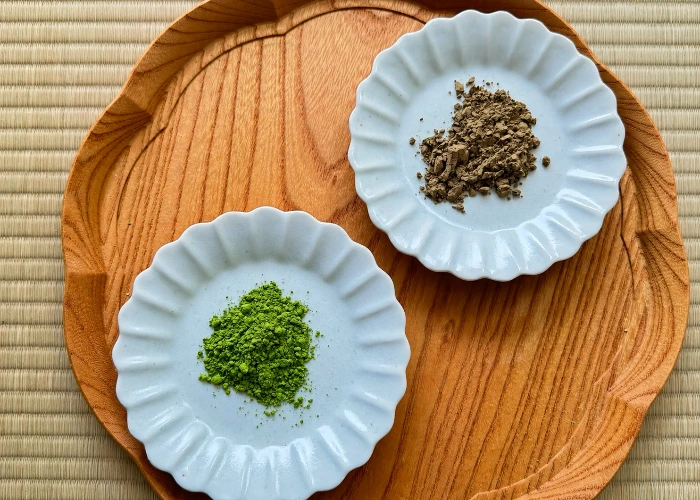
Amino acids and sugars undergo the Maillard reaction, producing aromatic compounds called pyrazines – this is the source of that signature “roasted” aroma, the same reaction behind the smell of coffee, toast, or perfectly cooked rice. Chlorophyll breaks down, turning the leaves from green to brown. Catechins (responsible for astringency) partially degrade, softening the bitterness.
Some caffeine is also believed to sublimate during roasting, which is one of the factors behind hojicha’s lower caffeine content, though the final amount still depends on the raw tea used and how it’s brewed.
Where matcha builds its flavor through the growing process, hojicha builds its character through this final act of heat. They’re almost mirror images of each other in how they’re made.
Hojicha’s History in Japan
Hojicha’s origins are surprisingly recent, it’s said to have been born in Kyoto in the early Showa era (1920’s). At the time, a tea merchant, looking for a way to make unsold or lower-quality green tea drinkable, tried roasting the leaves.
The resulting fragrant, smooth tea became popular, and hojicha was born.
In other words, hojicha emerged from a spirit of resourcefulness, making the most of what would otherwise go to waste. While matcha was refined over centuries within the formal tradition of tea ceremony, hojicha grew out of everyday life, born as a practical, approachable tea for ordinary people.
Its low caffeine content and gentle flavor, suitable for children and elders alike, trace directly back to these humble origins.
Leaf vs. Powder: A More Recent Shift
There’s another distinction worth making, one that often gets glossed over: hojicha exists in two very different forms, loose leaf and powder.
Traditionally, in Japan, hojicha was, and still largely is a loose-leaf tea, steeped in hot water and drunk hot, much like any other Japanese tea. This is the form that’s been part of everyday households since hojicha’s origins in early Showa-era Kyoto: simple, comforting, and meant to be brewed.
Hojicha powder, by contrast, is a much more recent development. There’s no single, well-documented date marking its arrival, but its rise tracks closely with the broader matcha latte and matcha-flavored dessert boom of the past couple of decades.
As cafés and food brands looked for new flavors to apply the same “powdered green tea” format that made matcha so versatile, lattes, ice cream, baking – hojicha was the natural next candidate.
Unlike matcha, which has always been ground into powder as part of its traditional production, hojicha powder is essentially an adaptation: roasted leaf, finely milled afterward, created specifically to meet the needs of modern beverage and dessert culture rather than as part of any historical brewing tradition.
So when someone says “I drink hojicha,” it’s worth asking which one they mean, the traditional steeped leaf their grandparents likely drank, or the modern powdered version designed for lattes and sweets. Both are hojicha, but they represent two very different chapters of its story.
Health Benefits and Caffeine: Matcha vs. Hojicha
When people switch from matcha to hojicha, or vice versa — it’s often for reasons that go beyond taste.
Here’s how the two actually compare.
Caffeine content: Matcha, since it’s made from whole, unroasted leaves (including the stems and veins that are typically discarded in other teas), retains a relatively high caffeine level, often comparable to a cup of coffee, depending on preparation.
Hojicha’s roasting process breaks down a portion of its caffeine, resulting in roughly one-third to one-half the caffeine of matcha or sencha. This is why hojicha is so often recommended for evening drinking, for children, or for anyone sensitive to caffeine.
Catechins and antioxidants: Matcha is exceptionally rich in catechins, particularly EGCG, since the whole leaf is consumed rather than just an infusion. This gives matcha a strong reputation for antioxidant support and metabolic benefits.
Hojicha’s roasting process reduces catechin content somewhat, trading some of that antioxidant punch for a gentler, easier-to-drink profile — though it still retains meaningful amounts of polyphenols and gains unique compounds formed during roasting, which have their own antioxidant properties.
L-theanine and calming effects: Matcha is well known for its high L-theanine content, an amino acid associated with calm, focused alertness — part of why matcha is prized for sustained energy without jitteriness.
Hojicha contains less L-theanine, but its lower caffeine and warm, roasted character make it a popular choice for relaxation, particularly in the evening.
Digestive gentleness. Because of its lower acidity and tannin content, hojicha is often considered gentler on the stomach than matcha, making it a common recommendation on an empty stomach or after meals.
In short: matcha is the more potent, concentrated option – higher in caffeine, catechins, and L-theanine, ideal for focus and sustained energy. Hojicha is the gentler alternative – lower in caffeine, easier on the body, and suited to relaxation and everyday drinking.
Neither is “better”; they simply serve different moments in the day. I enjoy drinking hojicha too, both hot and cold. Its comforting roasted aroma always reminds me of home, where my mother would drink it after almost every meal. I also occasionally enjoy a hojicha latte.
I wrote this simply because I think it’s nice to know the origin and story behind what we consume.
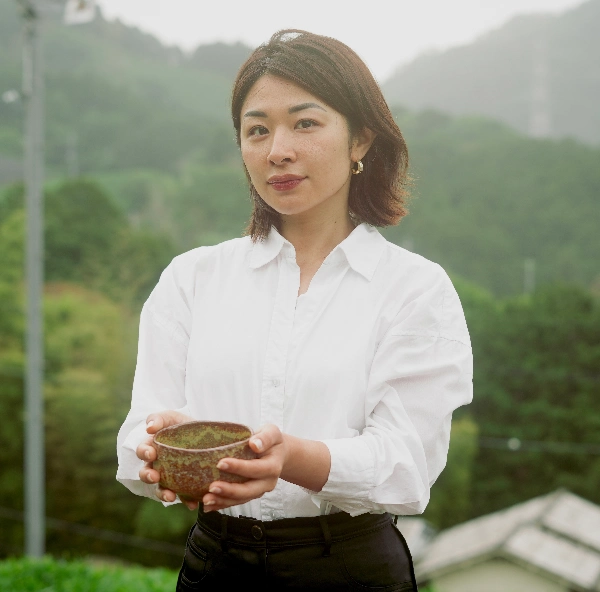
Written by Ryoko Benoist – founder of MUSUBI MATCHA, a certified Japanese Tea Advisor, and the author of Matcha — Histoire, tradition et recettes (Éditions La Plage, 2025). MUSUBI MATCHA sources exclusively from a family farm in Wazuka, Kyoto, of over 350 years, and one of the first in Japan to obtain JAS organic certification.
Discover our matcha → shop now